Description
About This Research Material
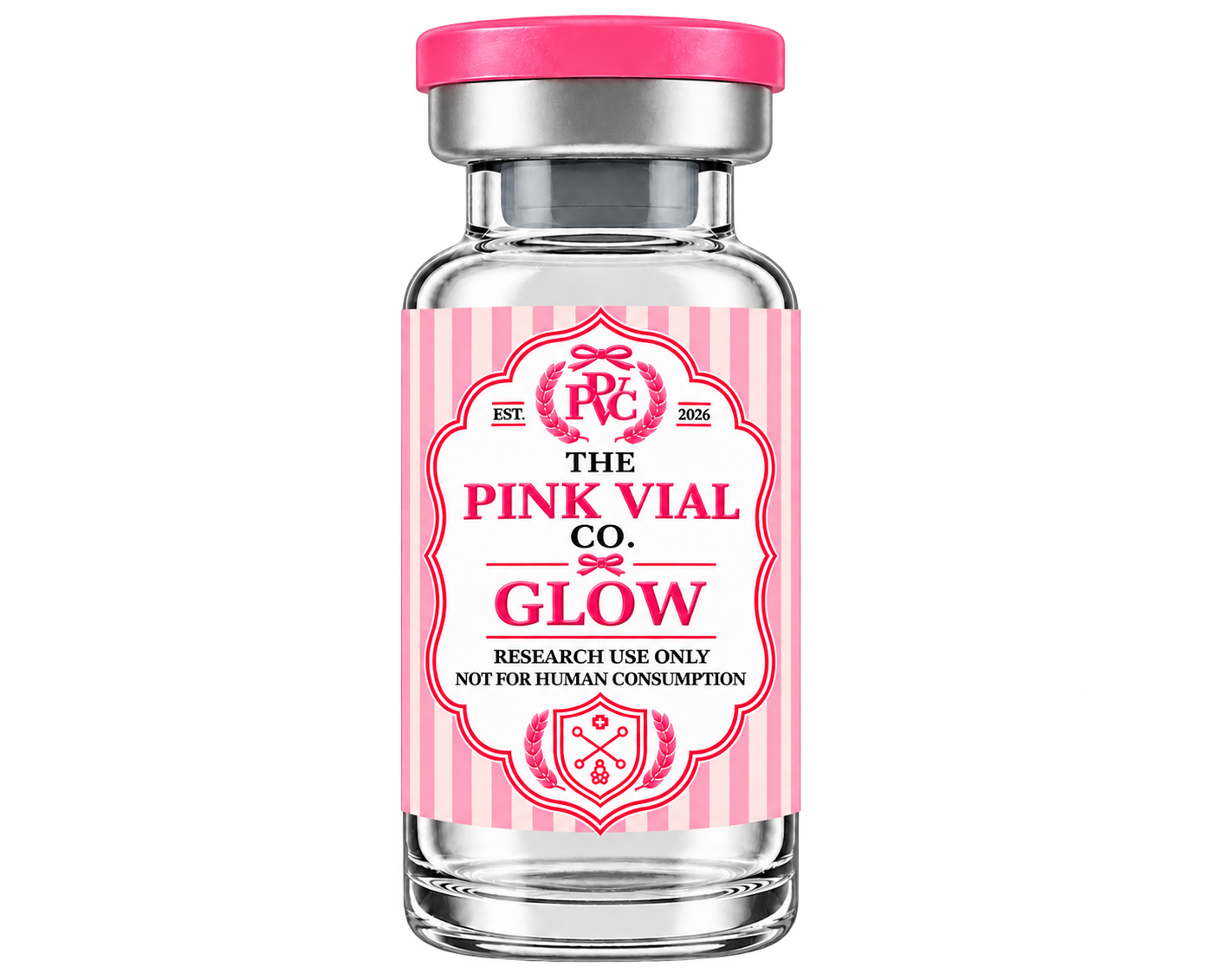
Glow Blend (70mg) is supplied as a single lyophilized research preparation that combines three sequence-defined peptides in one vial: BPC-157 (a synthetic stable gastric pentadecapeptide), TB-500 (the Thymosin Beta-4 sequence, a 43-residue peptide), and GHK-Cu (the copper(II) complex of the tripeptide glycyl-L-histidyl-L-lysine). Rather than three separate vials, the material is manufactured as a co-lyophilized mixture so that laboratories can study the three components together as a defined matrix. The bound copper(II) ion carried by the GHK-Cu fraction gives the freeze-dried solid its characteristic blue tint, which is why the finished powder is described on the certificate of analysis as a blue lyophilized powder rather than the white cake typical of a single metal-free peptide.
This blend is intended strictly for in-vitro and preclinical laboratory work by qualified researchers. It is a research chemical, not a drug, cosmetic, supplement, or food, and is not intended for human or veterinary use. The descriptions below concern the research substance itself — the identity of its three named components, what those components have been studied for in laboratory models, and how the combined material is analytically characterized and handled on the bench. Nothing here is a medical claim, and the research it summarizes is preliminary and ongoing.
The Three Named Components
- BPC-157: a synthetic 15-residue peptide corresponding to a fragment of a gastric protein. In the literature it is described as a stable pentadecapeptide because of its relative resistance to hydrolysis, and it appears frequently as a model peptide in in-vitro cell-migration, angiogenesis-related, and connective-tissue laboratory studies.
- TB-500 (Thymosin Beta-4): a 43-residue peptide that in cell-culture research is studied for its actin-binding, actin-sequestering behavior and its role in cytoskeletal dynamics and cell-motility assays.
- GHK-Cu: a copper-coordinated tripeptide (glycyl-L-histidyl-L-lysine chelating one copper(II) ion) first characterized in the 1970s. Because it carries a redox-active copper center, it is described as a metallopeptide and studied in copper-coordination chemistry and fibroblast/skin-model gene-expression research.